
What Is a 4 Digit PIN & How Does It Work? (Simple Guide)
Have you ever walked up to an ATM or unlocked your smartphone and been asked to enter a secret code? That code is usually a PIN. In today’s digital world, keeping our information safe is very important. Whether you are taking out money or just trying to open an app, you are likely using a PIN. But have you ever stopped to ask, what is a 4 digit pin exactly?
In this guide, we will explore the 4 digit pin meaning, how it keeps you safe, and the difference between pin and password. We will also talk about how to create a secure 4 digit pin so that your personal data stays private.
The Basics: What Does PIN Stand For?
First, let’s look at the definition. What does pin stand for? The letters P-I-N stand for Personal Identification Number. It is a numeric password shared between a user and a system that can be used to authenticate the user to the system.
So, when we ask what is a 4 digit pin, we are talking about a specific type of password that is made up of exactly four numbers. These numbers can range from 0 to 9. Because there are four spaces and ten possible numbers for each space, there are 10,000 possible combinations (from 0000 to 9999). This makes it harder for someone to guess than you might think!
How Does a PIN Code Work?
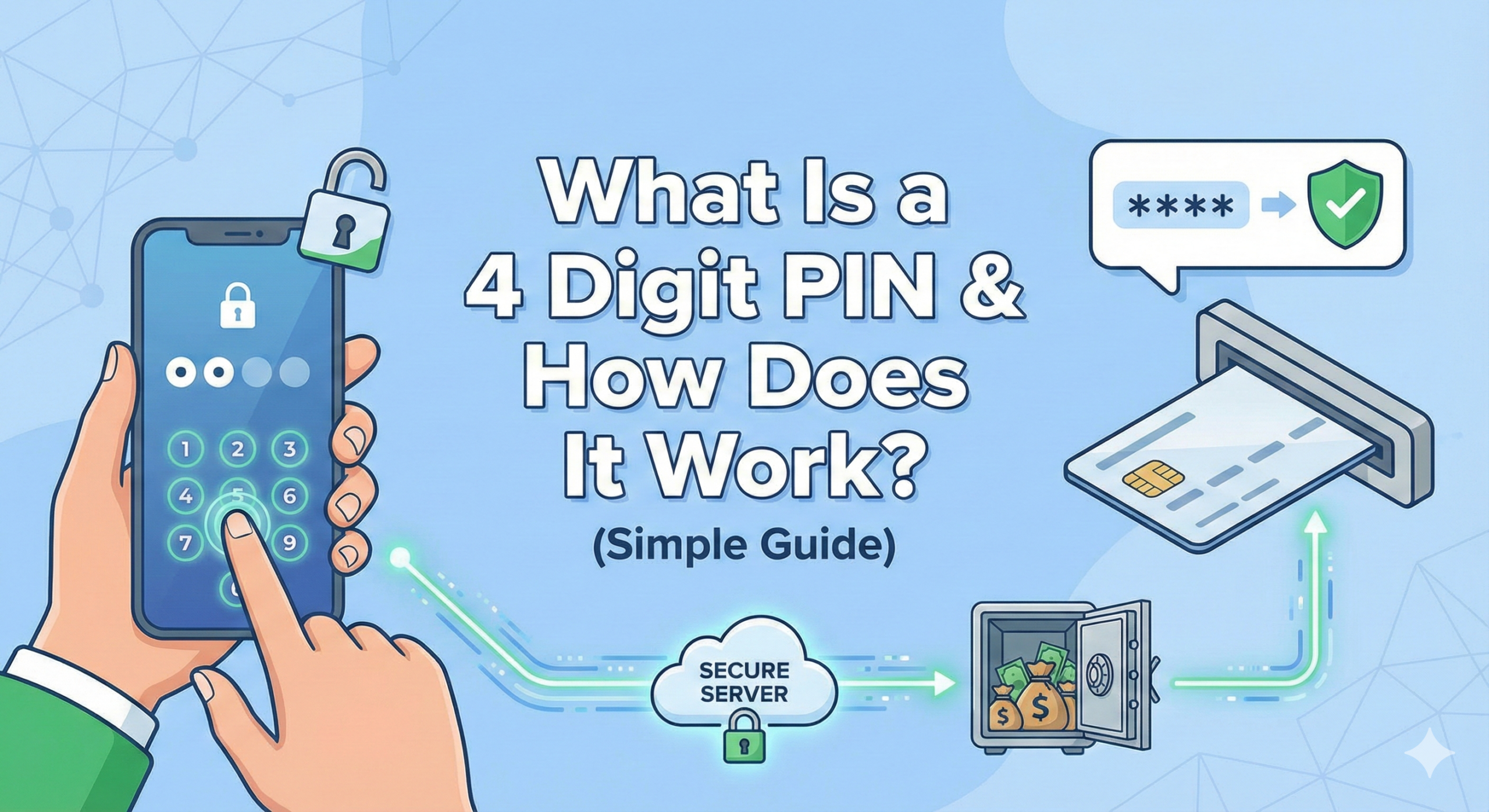
You might be wondering, how does a pin code work behind the scenes? When you type your PIN into a machine, like an ATM or a payment terminal, the system compares the numbers you entered with the numbers stored securely in its database.
- Entry: You type in your code.
- Encryption: The machine turns your numbers into a scrambled code (encrypted data) so hackers can’t read it while it travels.
- Verification: The bank or device checks if the scrambled code matches the one on file.
- Access: If it matches, you get access. If not, you are locked out.
This simple process is the foundation of banking pin explained simply. It is a quick and effective way to prove that you are who you say you are.
Where Is a 4 Digit PIN Used?
To fully understand what is a 4 digit pin, we need to look at where we use them in daily life. You might use them more often than you realize. Where is a 4 digit pin used? Here are the most common places:
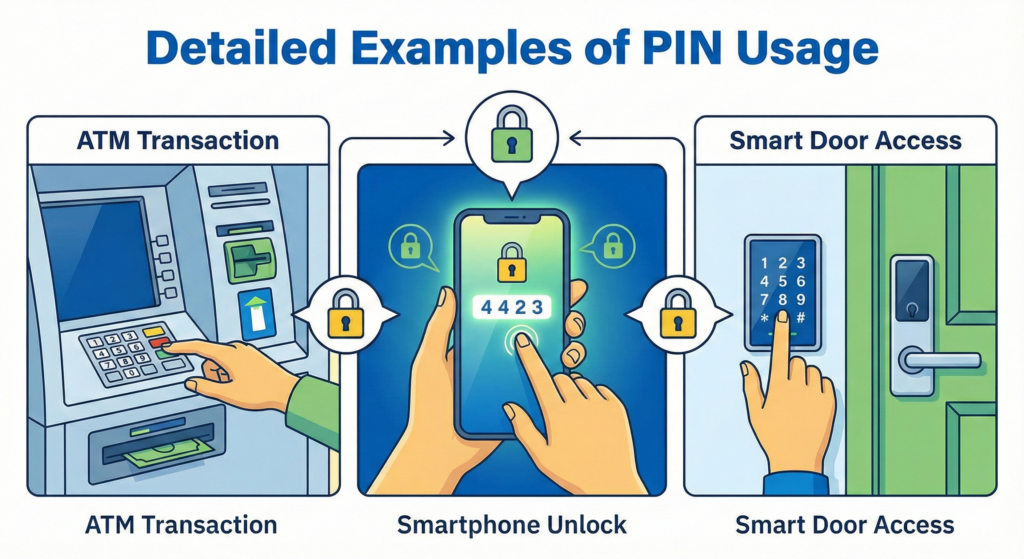
- ATMs and Banking: The most common use is a 4 digit pin for atm transactions. Without this code, your debit card is just a piece of plastic.
- Smartphones: Your phone lock pin code is the first line of defense if your phone gets lost or stolen.
- Door Locks: Many smart homes use electronic keypads that require a 4 digit pin example to unlock the front door.
- Voicemail: To listen to your messages securely, you often need a PIN.
- Parental Controls: TVs and gaming consoles use PINs to stop children from seeing content they shouldn’t.
If you need a unique code for any of these purposes, you can use our free 4 digit PIN generator to make one instantly.
PIN vs. Password: What is the Difference?
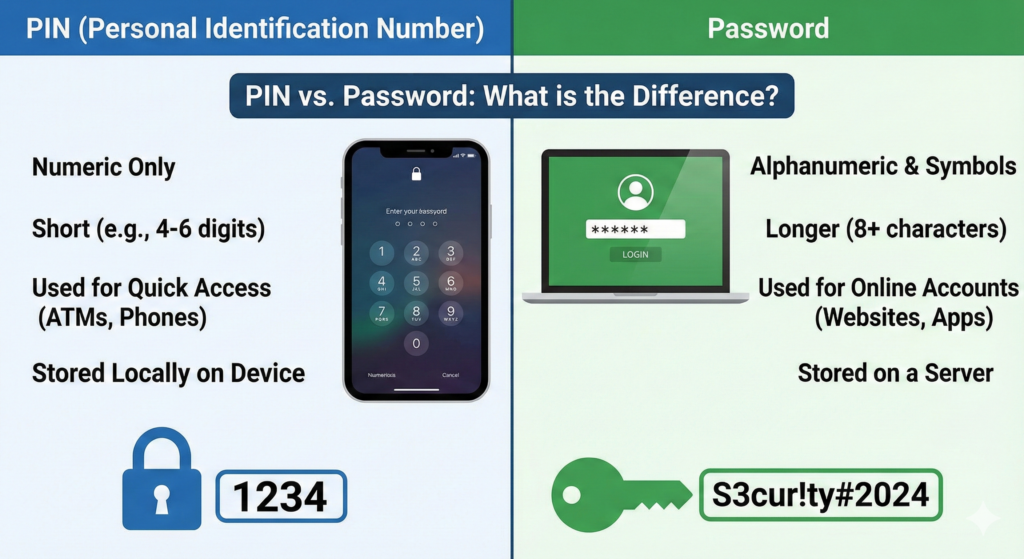
Many people get confused about the difference between pin and password. Are they the same thing? Not exactly.
- Structure: A 4 digit pin number is made strictly of numbers (numeric). A password can contain letters, numbers, and special symbols (alphanumeric).
- Length: A PIN is usually short (4 to 6 digits). Passwords are usually longer (8+ characters).
- Storage: In many systems, a PIN is verified locally (like on the sim card chip) or securely at the bank, whereas passwords are often checked against a server database for websites.
Even though they are different, both serve the same goal: security. Understanding what is a 4 digit pin helps you realize it is just a specialized, numeric type of password designed for quick entry.
Is a 4 Digit PIN Safe?
A very common question is: how safe is a 4 digit pin?
Mathematically, 10,000 combinations sound like a lot. If a human tried to guess your code, it would take them a very long time. However, computers are very fast. So, can a 4 digit pin be hacked?
The answer is yes, but only if you are careless. If a hacker has unlimited tries, they can guess a 4-digit PIN quickly. However, banks and phones limit the number of tries. Usually, after 3 wrong tries, the system locks up. This feature makes the 4 digit pin meaning much more secure in practice than in theory.
To stay safe, never use obvious numbers. A 4 digit pin example of a bad code is “1234” or “0000”. These are the first codes thieves try.
Need a random 4 digit PIN? Try our free 4 Digit PIN Generator
How to Create a Secure 4 Digit PIN
Knowing what is a 4 digit pin is the first step; creating a strong one is the second. You need a code that is easy for you to remember but hard for others to guess.
Here are tips on how to create a secure 4 digit pin:
- Avoid Birthdays: Do not use your birth year (e.g., 1990). It is easy to find on your social media.
- No Sequences: Avoid “1234”, “4321”, or “1111”.
- Visual Patterns: Don’t just type a line down the keypad (like 2580).
- Use Randomness: The best PINs are random. If you can’t think of one, you can ** generate a random 4 digit PIN using an online tool.
The Psychology Behind the 4 Digits
Why do we use 4 digits? Why not 3 or 5? When the ATM was invented, the inventor actually suggested a 6-digit PIN. However, his wife told him that she could only remember 4 digits easily. Because of this, the 4-digit standard became popular worldwide!
So, when you ask what is a 4 digit pin, you are actually looking at a system designed specifically for human memory. It is the perfect balance between being long enough to be secure (10,000 options) and short enough to remember instantly.
Common Issues with PIN Codes
Sometimes, things go wrong. Here is pin code explained in terms of troubleshooting:
- Forgetting the PIN: This happens to everyone. If you forget your banking pin explained, you usually have to visit the bank or use their app to reset it.
- Locked Accounts: If you enter the wrong 4 digit pin number too many times, your account will freeze. This is a safety feature, not a bug.
- Spying: Be careful of “shoulder surfing.” This is when someone stands behind you to watch you type your PIN. Always cover your hand when typing your 4 digit pin for atm withdrawals.
Detailed Examples of PIN Usage
Let’s look at a concrete 4 digit pin example in action.
Imagine you just bought a new debit card. You receive a letter with a temporary PIN.
- You go to the ATM.
- You insert your card.
- The screen asks: “Please enter your PIN.”
- You carefully type the numbers.
- You choose “Change PIN” from the menu.
- You need a new code. You decide to use an online 4 digit PIN generator tool to get a truly random number that no one can guess.
- You memorize it and finish the setup.
This process ensures that your money remains yours.
Can You Use More Than 4 Digits?
While we are focusing on what is a 4 digit pin, it is worth noting that some systems allow more. Some phones allow 6-digit PINs. A 6-digit PIN has 1 million combinations! However, the 4 digit pin meaning remains the standard for most banking cards around the world because it is faster to type.
Summary: Why the 4 Digit PIN Matters
In conclusion, what is a 4 digit pin? It is a simple, numeric key to your digital life. From unlocking your mobile device to withdrawing cash, it is a barrier that keeps strangers out.
Whether you are looking into how does a pin code work for a school project or you just want to improve your security, remember that randomness is your friend. The more random your numbers, the safer you are.
If you are setting up a new device today, don’t use “1234.” Take a moment to think of a unique 4 digit pin number. Your security depends on it.
We hope this guide has answered the question what is a 4 digit pin clearly for you. Stay safe and keep your codes secret!
Frequently Asked Questions (FAQs)
1. What is a 4 digit PIN used for mostly?
A 4 digit pin is mostly used for verifying your identity at ATMs, banking apps, and for unlocking mobile phones. It acts as a quick security check.
2. Can a 4 digit PIN be hacked easily?
If you use simple codes like “1234”, yes, can a 4 digit pin be hacked easily. However, if you use a random code and the system limits guesses to 3 tries, it is very safe.
3. What is the difference between PIN and password?
The main difference between pin and password is that a PIN is made only of numbers (usually 4), while a password can include letters, symbols, and numbers and is usually longer.
4. How do I choose a safe PIN?
To know how to create a secure 4 digit pin, avoid birth years or repeated numbers. Using a random number generator is the best way to get a strong code.
5. What does PIN stand for in banking?
In the context of banking pin explained, PIN stands for Personal Identification Number. It is your electronic signature.
6. Is a 6-digit PIN better than a 4-digit PIN?
Yes, mathematically it is safer because it has 1 million combinations compared to 10,000. However, understanding what is a 4 digit pin is still important because it is the standard for most ATM cards.
7. Where can I get a random PIN number?
You can think of one yourself, or you can use an online 4 digit PIN generator tool to create a completely random and secure number for you instantly.
Related Posts
- How to Create Strong Passwords for Social Media
- Fire Text for Gaming Names
- Top 10 Most Common PIN Codes to Avoid
Create a Secure 4 Digit PIN Now
Don’t risk weak PINs. Generate a strong, random 4 digit PIN instantly using our free tool.
Generate PIN Instantly →Final Thoughts
Now that you fully understand what is a 4 digit pin, you can see why it is such a small but powerful tool for your daily security. It protects your money, your private messages, and your home.
Don’t take your PIN for granted. If you are still using a weak code like your birthday, change it today! Use a tool to help you generate a new one and keep your personal information safe from prying eyes. Remember, safety starts with you.