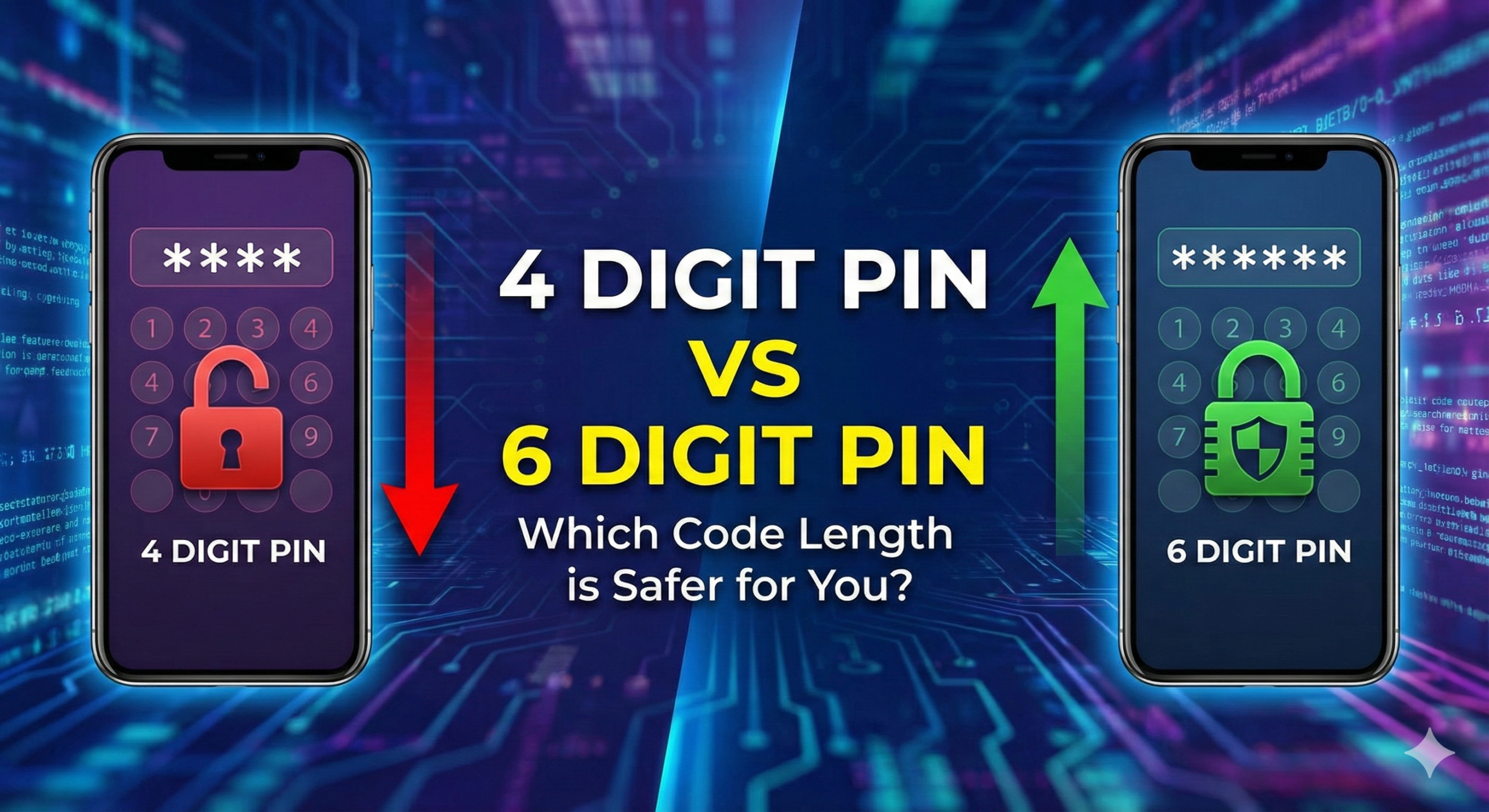

4 Digit PIN vs 6 Digit PIN: Which PIN Length Is Actually Safer?
In today’s digital world, we use PINs (Personal Identification Numbers) for almost everything. We use them to unlock our phones, access our bank accounts, and even open smart door locks. But there is a big question that many people ask: Is a longer PIN really better? This brings us to the debate of the 4 digit pin vs 6 digit pin.
Some people stick with 4 digits because it is easy to remember. Others switch to 6 digits because they think it is much harder for hackers to crack. In this guide, we will explore pin length security in simple words so you can decide which one is right for you. We will look at the math, the risks, and the best pin code length to keep your data safe.
The Basic Math: How Many Combinations?
To understand the difference between a 4 digit pin vs 6 digit pin, we first need to look at the numbers.
When you use a 4-digit PIN, you are using numbers from 0 to 9 for each spot.
- 4-Digit PIN: There are 10,000 possible combinations (from 0000 to 9999).
- 6-Digit PIN: There are 1,000,000 possible combinations (from 000,000 to 999,999).
Just by looking at the math, the 6 digit pin security seems much stronger. A hacker trying to guess a 4-digit code has a 1 in 10,000 chance. But if you use a 6-digit code, their chance drops to 1 in 1,000,000. That is a huge difference!
However, does this mean your 4-digit code is useless? Not exactly. Let’s dive deeper into pin code security comparison.
4 Digit PIN Security: Is It Still Safe?
Many smartphones and ATM cards still use 4 digits as the standard. You might wonder why banks and tech companies allow this if it has fewer combinations.
The reason 4 digit pin security often works is because of “limitations.” Most devices do not allow a thief to guess forever. If someone steals your phone, they usually only get 3, 5, or 10 tries before the phone locks up completely.
Because of this lockout feature, a brute force pin attack (where a computer tries every number) is very hard to do on a physical phone. Even with only 10,000 combinations, a thief cannot try them all if the phone locks after 10 wrong attempts.
If you are setting up a new device and want something quick to remember, you can generate a secure 4 digit PIN using a random tool to ensure it isn’t easy to guess.
6 Digit PIN Security: Why Upgrade?
So, if 4 digits are okay, why do newer iPhones and Androids suggest 6 digits? The answer is “time” and “special cracking tools.”
If a hacker connects your phone to a special computer software that bypasses the “lockout” rule, they can try codes very fast.
- It might take a computer a few minutes to crack a 4-digit code.
- It could take the same computer days or weeks to crack a 6-digit code.
This is where the battle of the 4 digit pin vs 6 digit pin gets interesting. The extra two numbers add a massive layer of time protection. When we ask, is 6 digit pin safer than 4 digit codes? The answer is yes, specifically against advanced computer attacks.
The Problem with Weak PIN Combinations
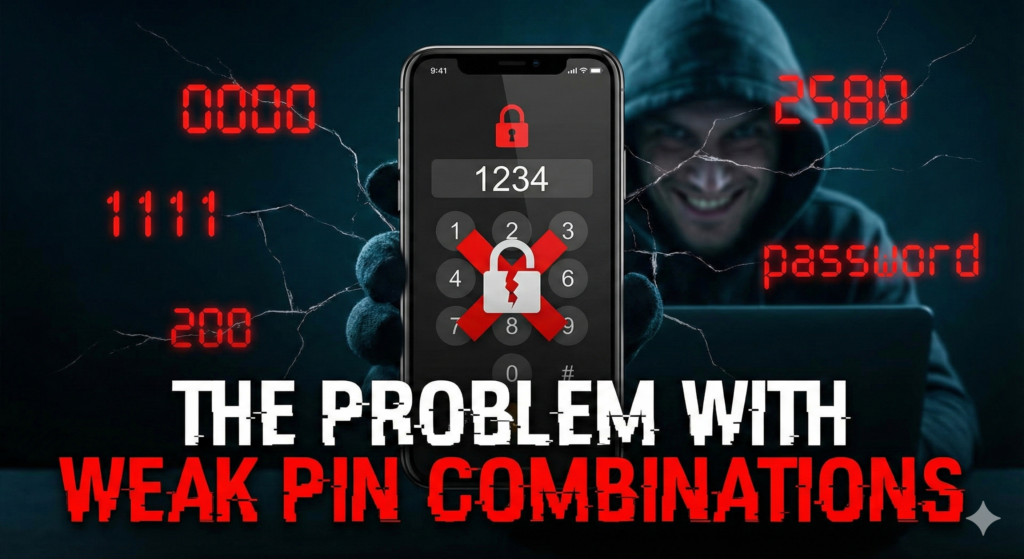
No matter if you choose a 4 digit pin vs 6 digit pin, your security depends on which numbers you choose. A 6-digit PIN can actually be weaker than a 4-digit PIN if you choose bad numbers.
Examples of weak PINs:
- 1234 or 123456
- 0000 or 000000
- 1111 or 555555
- Your birth year (e.g., 1990)
Hackers know that people are lazy. They will try these weak pin combinations first. If you use “123456,” you are not safer than someone using a random “8371” PIN. This is a vital part of numeric pin security. Never use patterns on your keypad (like 2580, which is a straight line down the middle).
Short vs Long PIN Codes: Convenience vs. Safety
When choosing between short vs long pin codes, you have to balance your life.
- 4 Digits: Faster to type. Good for unlocking your phone 50 times a day.
- 6 Digits: Takes a split second longer but offers 100 times more number combinations.
For most people, the extra second it takes to type two more numbers is worth the peace of mind. This is why many experts say the best pin code length for a smartphone is now 6 digits.
However, if you struggle to remember long numbers, a random 4-digit code is better than a predictable 6-digit code. If you are stuck, you can use a random 4 digit PIN generator to help you pick a number that has no pattern.
Mobile PIN Security vs. ATM PIN Length
The rules change depending on what device you are using.
1. Mobile PIN Security
Your phone contains your emails, photos, and passwords. It is a goldmine for thieves. Because phones can sometimes be hacked with software, using a 6-digit PIN is highly recommended here. In the debate of 4 digit pin vs 6 digit pin for phones, 6 wins.
2. ATM PIN Length and Banking PIN Security
Most ATMs in the world still require a 4-digit PIN. Banks rely heavily on the “3 strikes and you are out” rule. If you get your ATM PIN wrong three times, the machine eats your card. Because the physical card is needed (usually), banking pin security is still quite strong with just 4 digits. However, always cover your hand when typing to stop hidden cameras from seeing your code.
Protection Against “Smudge” Attacks
Here is a unique reason why 6 digit pin security is better. It helps against “Smudge Attacks.”
When you touch your screen, your oily fingers leave smudges. If you use a 4-digit PIN, a thief can look at the screen and see four smudge marks. They know exactly which four numbers you used. They just have to guess the order.
If you use a 6-digit PIN, or a PIN with repeating numbers, the smudge pattern is harder to read. It makes it more difficult for a thief to guess your code just by looking at your dirty screen. This is a practical win for the 4 digit pin vs 6 digit pin argument.
Secure PIN Examples and Tips
To make sure you are safe, follow these tips for numeric pin security:
- Go Random: Do not use dates like birthdays or anniversaries.
- Avoid Patterns: Do not use 1212 or 1234.
- Longer is Stronger: If your device allows it, switch to 6 digits.
- Keep it Clean: Wipe your screen so fingerprints don’t show your pass code spots.
Secure pin examples (Do not use these, just examples of randomness):
- 4-Digit: 8205, 1948, 6291
- 6-Digit: 928401, 736192, 550183
Real World Scenario: The “Shoulder Surfer”
Imagine you are on a bus. You unlock your phone. Someone standing behind you is watching. This is called “Shoulder Surfing.”
If you are typing a 4-digit code, it is very easy for the person to memorize it instantly. Tap-Tap-Tap-Tap. Done. If you are typing a 6-digit code, it is harder for their brain to catch the sequence in one look.
In crowded places, location-based keywords of security matter meaning, where you are affects how safe you are. In public, the longer code in the 4 digit pin vs 6 digit pin comparison offers better protection against spying eyes.
Conclusion: Who Wins the 4 Digit PIN vs 6 Digit PIN Battle?
So, who is the winner?
- Winner for Security: 6-Digit PIN. With 1 million combinations, it protects better against software attacks and guessing.
- Winner for Speed: 4-Digit PIN. It is fast and usually “good enough” if your phone has a strict lockout feature.
However, if we look strictly at safety, the is 6 digit pin safer than 4 digit answer is clear: Yes, 6 digits are safer. As computers get faster, 4 digits are becoming too easy to crack for sophisticated thieves. If you care about pin length security, upgrade to 6 digits today.
FAQs Regarding PIN Security
1. Is a 4 digit PIN safe for my bank app?
While many banks still use 4 digits for cards, for a mobile app, it is better to use 6 digits or biometric login (fingerprint/face ID). However, if you have strong banking pin security settings like auto-lock, 4 digits can be okay.
2. Why does my iPhone ask for 6 digits now?
Apple switched to 6 digits to increase numeric pin security. This makes it much harder for law enforcement or hackers to use “brute force” boxes to unlock stolen iPhones. It shifts the odds from 1 in 10,000 to 1 in 1 million.
3. What is the most common 4-digit PIN?
The most common and weak pin combinations are “1234”, “0000”, “2580”, and “1111”. Never use these. If you need a random number, use a generator tool.
4. Does the debate of 4 digit pin vs 6 digit pin apply to door locks?
Yes. For smart home locks, pin code security comparison is important. Since smart locks often don’t have the same high-tech security as phones, using a longer code (6 digits) is much safer to prevent burglars from guessing the code.
5. Can a hacker crack a 6-digit PIN?
Yes, but it is much harder. A brute force pin attack on a 6-digit code takes significantly longer than on a 4-digit code. However, if your PIN is “123456”, it can be guessed instantly. Randomness is key.
6. Is an alphanumberic password better than a PIN?
Yes. A password with letters and numbers is stronger than both short vs long pin codes. However, for quickly unlocking a phone screen, a PIN is more convenient for most users.
7. How often should I change my PIN?
You should change your PIN if you suspect someone saw it. Otherwise, changing it once a year is a good habit. When you change it, ensure you check secure pin examples so you don’t pick an easy number.
Related Posts
- What Is a 4 Digit PIN & How Does It Work?
- Top 10 Most Stolen Passcodes and How to Avoid Them
- Burning Text vs Flaming Text
- Free 4 Digit PIN Generator | Random 4-Digit Number Tool
Even if you use a 4 digit PIN, security improves massively when it’s random. Generate a strong, unpredictable PIN using our free online PIN generator.
🔐 Generate a Secure 4 Digit PINFinal Thoughts
The battle of the 4 digit pin vs 6 digit pin comes down to balancing convenience and security. While 4 digits are quick, 6 digits provide a much stronger shield for your personal data. In an age where our phones contain our whole lives, taking the extra second to type two more digits is a small price to pay for safety.
Whether you choose 4 or 6, remember that the most important thing is randomness. Stay away from birthdays and patterns. If you need help creating a new code, remember to check our tools to generate a truly random sequence. Stay safe!